


Top 10 Industries Using Fiber Optic Rotary Joints
BY NBG
 2026-01-05
VIEWS: 588

Top 10 Industries Using Fiber Optic Rotary Joints
The fiber optic slip ring or fiber optic rotary joint (FORJ) has now become an essential part of modern rotating equipment in various industries. These are new devices that enable free flow of data and can also move in a continuous rotational mode, and therefore would be very crucial in industries that demand high-speed and high-bandwidth communication systems. With the increasing trend of automation and connectivity being made a priority in organizations, Fiber Optic Rotary Joints are enjoying unprecedented demand.
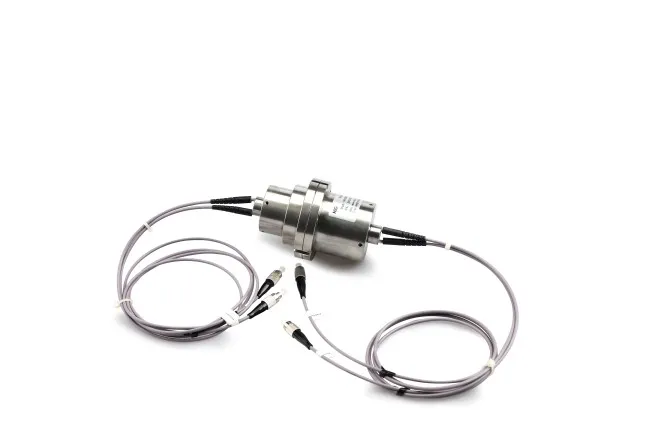
It is estimated that the global fiber optic rotary joints market was $1.2 billion in 2024 and a forecasted market of $2.5 billion in 2033, with a spectacular 9.2% CAGR. Such expansion highlights the essential nature of the technology in a variety of industrial uses in 2025.
Working Principle of Fiber Optic Rotary Joints
The Fiber Optic Rotary Joints follow a complex and very classy principle, which integrates the rotational mechanism with optical transmission. Contrary to the conventional slip rings that use physical brushes and conductive rings, the fiber optic versions use data through the fiber optic cables that have the ability to accommodate several channels of communication at the same time.
The principle of operation is inserting a fixed part and a moving part with two (one on the stator and one on the rotor) or more fiber optic cables. When a machine spins, data is transferred through these cables at light speed with no interruption as the optical signals transfer the data. Contactless transmission also means there are no wear-and-tear problems with such a system as there are with brush systems, which means that the maintenance needs are decreased to a minimum, and the overall operational life is also much higher.
Single or multiple fiber channels can be supported in Fiber Optic Rotary Joints, supporting single-mode or multimode fiber and all connector types such as FC, ST, SMA, and LC. Hybrid slip rings that can combine fiber optic transmission and conventional electrical rings are used in many modern applications so that a combination of power and data can be transferred simultaneously in a small assemblage. This flexibility enables the engineers to achieve maximum performance in a wide range of rotating applications at the lowest signal loss and highest data transmission rate.
10 Industries Using Fiber Optic Rotary Joints
Defense and Aerospace

The defense and aerospace field is the most significant consumer of Fiber Optic Rotary Joints, and it takes about 35% of the market implementations. Such industries depend on FORJs to have radar systems, missile guidance equipment, satellite tracking systems, and unmanned aerial vehicles (UAVs). The need to transfer data reliably in very hostile environments, and the high standards of safety, such as the DO-160 and MIL-STD standards, render fiber optic solutions imperative in the case of mission-critical applications.
Telecommunications

The implementation of 5G technology has transformed telecommunications infrastructure to generate a significant demand for high-bandwidth data transmission systems. The Fiber Optic Rotary Joints assist rotating parts on cell towers and satellite communication platforms to provide the backbone infrastructure that supports global connections. ITU also noted that the count of mobile broadband subscriptions worldwide was 5.3 billion as of 2020, which implies that the sector heavily depends on the effective management of data.
Medical Imaging and Diagnostics

Innovative imaging tools like CT scanners, MRI machines, and rotational diagnostic tools are also relying on Fiber Optic Rotary Joints to transmit data accurately. Such medical equipment involves the necessity to transfer image data of high quality when the device is in continuous rotational movement, and FORJs play a crucial role in the preservation of diagnostic quality and operational stability in the healthcare facilities of any country in the world.
Wind Energy and Renewable Power

Wind turbines form a significant area of application, and slip rings can be used to communicate between rotating blades and the stationary nacelles. Specific versions of Fiber optic are used in real-time monitoring of conditions, pitch control systems, and predictive maintenance, which minimise downtime and maximise the efficiency of generation in renewable energy installations.
Industrial Automation and Robotics

The automation industry represents about a quarter of the use of the rotary joint units. Fiber Optic Rotary Joints are used in collaborative robots (cobots) and advanced manufacturing systems in the joints and end-effectors that have articulations that allow continuous movement without discontinuity in the signal flow. The miniaturization trend in industrial equipment has necessitated the need to develop small and lightweight fiber optics that do not compromise on performance.
Military and Defense Systems

Outside the aerospace realm, the military ground systems use the Fiber Optic Rotary Joints in radar systems, gun turrets, and tracking gear. The need for rugged and reliable designs that can be used in harsh conditions has made fiber optic a key infrastructure in defense applications that need less maintenance and the highest availability of operation.
Semiconductor Manufacturing
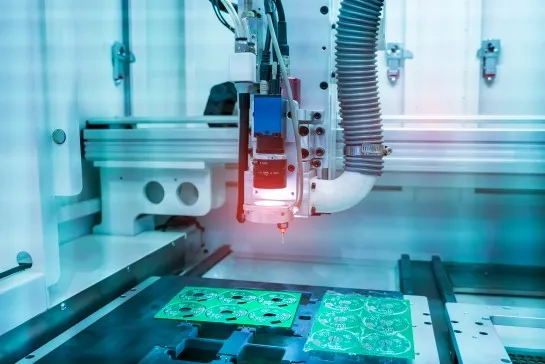
Precision semiconductor fabrication equipment is based on Fiber Optic Rotary Joints to transmit signals in clean rooms without contamination. Fiber optic transmission is the perfect solution to ensuring efficiency in production due to the high-speed data needs of the advanced manufacturing processes and the sensitivity of the semiconductor materials to electromagnetic interference.
Rotating Machinery and Industrial Equipment
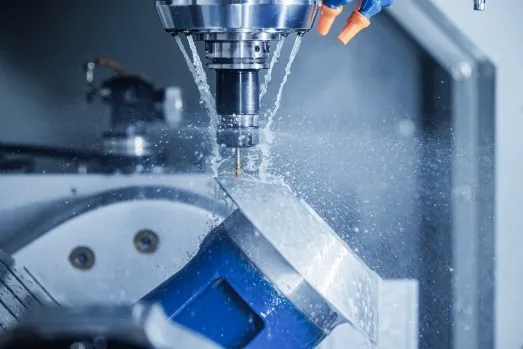
The traditional factory automation systems, such as conveyor, automated turntable, and crane systems, are increasingly being integrated with Fiber Optic Rotary Joints to improve their functional stability. The advantage of these applications is that the technology can be used to send signals and power throughout rotating assemblies and also meet the Industry 4.0 connection needs that up-to-date manufacturing requires.
Remote Operated Vehicles (ROVs) and Marine Systems
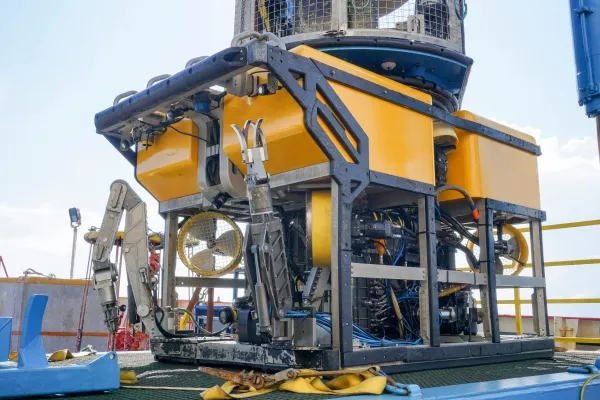
The subsea uses are considered a key area of growth, with an estimated 25% of total unit utilization in industries. Underwater Fiber Optic Rotary Joints are used in underwater exploration ROVs, underwater surveillance systems, and are in underwater marine applications to transmit high-bandwidth data to surface operations to enable real-time monitoring and remote operation capabilities.
Smart Cities and IoT Infrastructure

Emerging smart city projects and Internet of Things (IoT) deployments are driving new applications for Fiber Optic Rotary Joints. The Smart Cities Council states that the amount of investments in smart cities all over the world will exceed $2.57 trillion by 2025, which will demand efficient data transfer systems in rotating urban infrastructures, surveillance systems, and automated services.
Benefits of Fiber Optic Rotary Joints
The Fiber Optic Rotary Joints present significant benefits over conventional slip ring technologies. This will lead to a direct cost reduction in maintenance and an increase in the lifespan of equipment, and will be economically beneficial to high-use applications.
● They can transmit data at high speed and high bandwidth with extremely low signal attenuation , and this ensures their accuracy in the flow of real-time data in demanding environments.
● Contactless fiber optic transmission offers high reliability, especially in areas where there is a need to be exposed to contamination, electromagnetic interference, or where there is a need to withstand harsh environmental conditions.
● The multi-channel capability allows the transfer of multiple signals simultaneously by the same rotating assembly, minimizing the complexity in design and minimizing the use of space.
Also, fiber optic systems facilitate the integration of 5G technologies, which place organizations in the future connectivity requirements and digital transformation programs.
Conclusion
In 2025, Fiber Optic Rotary Joints will no longer be a unique part but a general technological product used in a wide variety of industries. Their adoption in defense and aerospace systems, telecommunications infrastructure, medical devices, and renewable energy systems indicates the overall transfer of the industries to high-performance, reliable data transmission in rotating conditions. With increasing automation and the growing connectivity pressures in the global markets, Fiber Optic Rotary Joints will keep on diversifying into new applications in smart infrastructure and IoT frameworks.
NBG Innovations Group Pte.Ltd.
#13-13A, International Plaza, 10 Anson Road, Singapore (079903)


Navigation
 HomeSustainable
Product